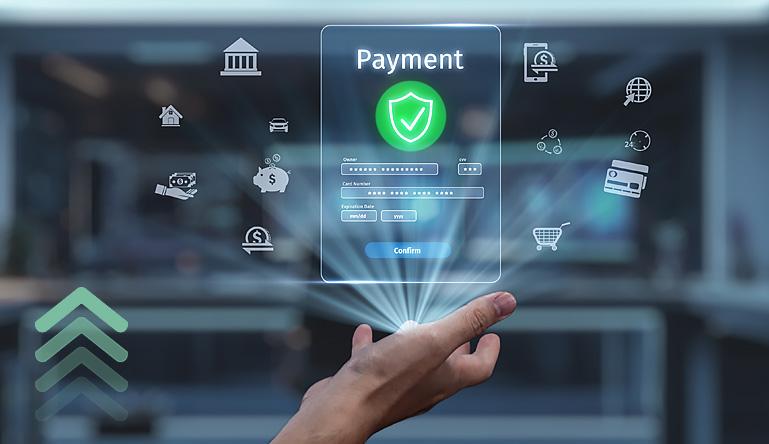
Protecting Data and Reducing Risk in Public Payments
Trust is the foundation of every government payment interaction. Whether residents are paying taxes, court fines, utilities, or permit fees, they expect the experience to be safe, quick, and reliable. But as fraud attempts grow more sophisticated and cyberattacks rise across the public sector, governments are under more pressure than ever to secure sensitive financial data while still offering convenient digital payment experiences.
At the same time, resident expectations continue to accelerate. People are accustomed to mobile-first checkout, digital wallet payments for local government services, biometric authentication, and real-time confirmation from the private sector. They want those same capabilities when interacting with the government. Modern payment security architecture makes this possible, delivering both enhanced protection and a smooth, frictionless experience.
This is where PCI-compliant payment processing for government, strong encryption, tokenization, and Point-to-Point Encryption (P2PE) become critical. These tools don’t just protect data; they protect public confidence in government systems.
Why Security Architecture Defines Public Trust
Government agencies manage large volumes of sensitive information, and outdated systems create vulnerabilities that can undermine confidence. Manual card entry, unencrypted data, legacy hardware, and fragmented workflows make payment environments more susceptible to breaches or fraud.
A single security incident can damage trust for years, affecting not just a department but the perception of the government as a whole. When payment systems are secure, compliant, and reliable, residents feel assured that their information is protected. That trust becomes just as important as the revenue being collected.
Modernizing security architecture isn’t optional; it’s a core requirement for maintaining credibility, safeguarding taxpayer dollars, and reducing operational risk.
Understanding PCI Compliance in Government Settings
PCI DSS compliance establishes the minimum-security standards for handling cardholder data, but for many public agencies, achieving compliance is complex. Legacy environments often store or transmit more cardholder data than necessary, leaving governments with large PCI scopes and higher exposure.
Cloud-based, secure online payment systems for municipalities dramatically reduce that burden by ensuring sensitive data never resides on local networks. Tokenization replaces card numbers with non-sensitive values, encryption protects the data as it moves through the ecosystem, and secure platform design removes much of the manual effort required to remain compliant.
When agencies reduce PCI scope, they reduce risk, cost, effort, and the likelihood of a compliance lapse, all of which strengthen both security and public confidence.
The Role of Encryption and P2PE in Reducing Risk
Encryption is the backbone of modern municipal payment processing solutions. When data is encrypted from the moment it enters a device and throughout its entire journey, the likelihood of interception or misuse drops significantly.
P2PE takes this protection further by encrypting card data at the exact point of entry before it ever touches government networks. For public agencies, this means raw card data never exists in an unprotected state inside their environment, shrinking the attack surface and simplifying compliance.
With sophisticated fraud methods increasing, governments need layers of security that include encryption, tokenization, authentication safeguards, secure integrations, and continuous monitoring. These measures work together to minimize exposure while keeping transactions moving smoothly.
Key Capabilities Governments Should Prioritize
Governments evaluating secure payment modernization efforts should look for:
- Encryption and tokenization that eliminate exposure to raw card data: Data should remain encrypted throughout the transaction lifecycle, with tokenization used for refunds, reporting, and internal workflows.
- Fraud prevention and monitoring tools that detect suspicious behavior in real time: Modern systems use analytics, configurable risk thresholds, and automated monitoring to flag anomalies and reduce fraud losses.
These capabilities create the foundation for secure online payment systems for municipalities that protect both payment data and public trust.
What a Modern, Secure Government Payment Platform Should Include
To provide both strong security and frictionless experiences, governments need a platform that supports:
- Enhanced payment options, including credit cards, ACH, PayPal, Venmo, Apple Pay, and other digital wallet payments for local government services
- Advanced reporting and automated reconciliation to streamline financial workflows and reduce errors
- Strong encryption, tokenization, and reduced PCI scope for long-term compliance and risk reduction
- Secure API-first integrations that connect safely with tax, utility, court, and permitting systems
- Self-service tools and dedicated support that empower staff and ensure secure daily operations
These features help agencies balance robust protection with the seamless experience citizens now expect.
Security and Convenience Can Coexist
The assumption that security slows down convenience is outdated. Today’s platforms show that enhanced security often improves usability. When agencies adopt strong encryption, P2PE devices, tokenization, and API-first infrastructure, residents see faster checkouts, mobile-friendly workflows, and fewer barriers during payment.
Equally important, internal staff experience reduced manual work through automated payment reconciliation for agencies, cleaner reporting, and simplified audits. Strong security architecture becomes an enabler of better service, not an obstacle.
Balancing security and convenience isn’t just possible, it’s essential for modern public service.
A Strong, Secure Foundation for Public Payments
For governments ready to strengthen security while improving convenience, Catalis Checkout offers a modern architecture designed specifically for the public sector. It reduces risk, supports compliance, and integrates securely with core government systems while still delivering the intuitive experience residents expect. By combining frictionless payments with advanced security capabilities, Catalis Checkout helps agencies protect sensitive data, enhance public trust, and maintain operational resilience in an increasingly complex digital landscape.
Visit Catalis for a comprehensive list of our government and public sector solutions.